Scientifically Best Time to Sleep and Wake Up for You
There’s no single clock time that’s perfect for everyone, but there is a scientifically best time to sleep and wake up for you — and it comes down to two things: completing a full number of 90-minute sleep cycles, and lining those cycles up with your body clock. Get both right, and you wake up clear-headed instead of groggy, often on the same hours that used to leave you wrecked. This guide explains what the science actually says, gives you a recommended bedtime by age, and lets you calculate your own exact times in seconds.
What’s the Scientifically Best Time to Sleep and Wake Up?
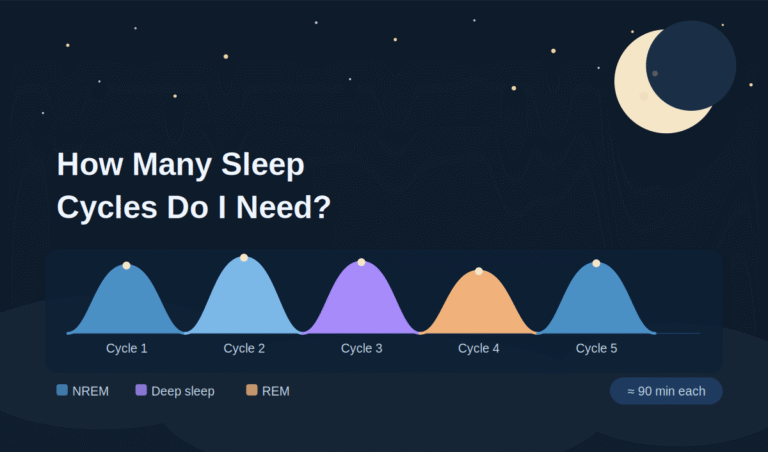
The best time to sleep and wake up is the schedule that lets you finish a full number of sleep cycles and still get up when your day actually starts. Most adults do best on 5 to 6 full cycles a night — roughly 7.5 to 9 hours — going to bed and getting up at the same time every day, weekends included.
The reason timing matters as much as total hours is simple: if your alarm goes off in the middle of a cycle, you wake up foggy; if it goes off at the end of one, you wake up refreshed, even on the same number of hours. So the “scientifically best” time isn’t a magic number on the clock — it’s whichever bedtime completes your cycles before your fixed wake-up time, repeated consistently. Each cycle runs about 90 minutes, which is where the clean sleep totals come from (4.5, 6, 7.5, and 9 hours); the full breakdown is on the cycle length page.
Calculate your Ideal Bedtime and Wake-up Time
Quick Sleep Calculator
Pick a time and get bedtimes or wake-up times that land on a full 90-minute cycle.
Tell the tool when you want to wake up, and it lists the bedtimes that end on a complete cycle. Or give it your bedtime, and it tells you the best times to wake up. That’s it — no guesswork.
Open the Full Sleep Calculator →
Why Cycle Timing Decides How You Feel
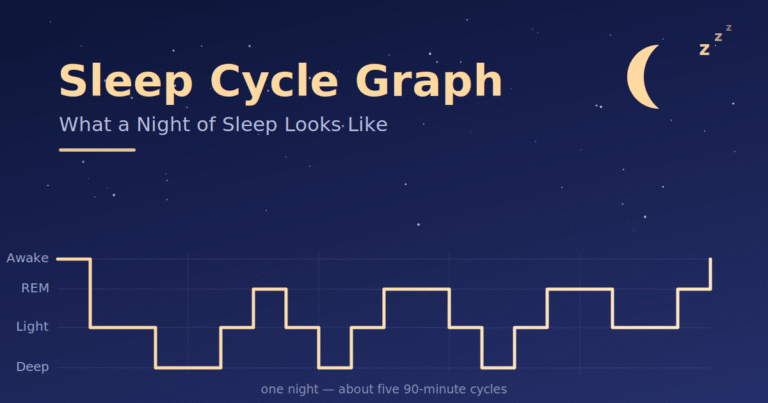
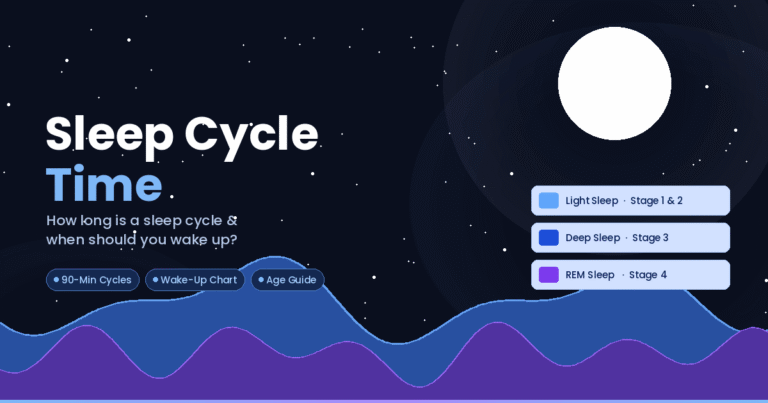
You don’t need a biology degree to use this, just the shape of one cycle. Each ~90-minute cycle moves from light sleep, down into deep sleep, and up into REM before resetting. Two practical takeaways for timing:
- Waking during deep sleep is what leaves you groggy and heavy — your alarm caught you mid-cycle. Deep sleep is concentrated in the first half of the night, so this hits hardest when you sleep too few hours.
- REM grows toward morning, and it’s a light stage, which is exactly why finishing on a full cycle and waking near the end of one feels so much easier.
So “the best wake-up time based on your sleep cycle” really means landing your alarm at the end of a cycle, not the middle of one. If you want to picture how that rise-and-fall looks across a whole night, see the sleep cycle graph.
Scientifically Best Bedtime by Age
How much sleep you need shifts with age, so the ideal bedtime shifts too. The table below assumes a 6:30 AM wake-up (a typical school or work start) and works the bedtime backward from the hours each group needs. If your wake-up time is different, slide the whole window earlier or later by the same amount.
| Group | Age | Sleep needed | Ideal bedtime (for a 6:30 AM wake-up) |
|---|---|---|---|
| Kids | 6–12 yrs | 9–12 hours | 6:30 – 9:30 PM |
| Teenagers | 13–18 yrs | 8–10 hours | 8:30 – 10:30 PM |
| Students | 18–25 yrs | 7–9 hours | 9:30 – 11:30 PM |
| Adults | 26–64 yrs | 7–9 hours | 9:30 – 11:30 PM |
| Older adults | 65+ yrs | 7–8 hours | 10:30 – 11:30 PM |
For your exact bedtime and wake-up times — including any clock time not in this table — run your schedule through the sleep calculator, or read them straight off the bedtime chart.
Your Circadian Rhythm and Body Clock
Your body clock — your circadian rhythm — is the roughly 24-hour timer that makes you naturally alert during the day and sleepy at night. For scheduling, the only rule you need is this: keep your sleep and wake times steady.
When you go to bed and get up at the same time daily, your body clock locks onto that schedule, so falling asleep and waking up both get easier. When you bounce around — late on weekends, early on weekdays — you’re basically giving yourself a mini jet lag every Monday. A consistent bedtime and wake time is the single biggest thing that makes any “best time” schedule actually work, which is why consistency matters more than hitting a perfect clock time.
The 10-3-2-1-0 Wind-Down Rule
Picking the right bedtime only helps if you can fall asleep at it. The 10-3-2-1-0 rule is a simple countdown that sets up an easy wind-down (you’ll also see it written with slightly different numbers, but this is the popular version):
- 10 hours before bed — no more caffeine
- 3 hours before bed — no more big meals or alcohol
- 2 hours before bed — stop working
- 1 hour before bed — screens off
- 0 — the number of times you hit snooze in the morning
Pair this with your calculated bedtime, and you actually fall asleep near that 15-minute mark the calculator assumes, so your cycles start on schedule.
Is 10 PM to 5 AM (or 10 PM to 4 AM) Enough Sleep?
Both come up a lot, so let’s run the numbers:
- 10 PM – 5 AM = 7 hours in bed. Minus ~15 minutes to fall asleep, that’s about 6 hours 45 minutes of sleep — roughly 4.5 cycles. It’s workable for many adults but sits at the low edge. To hit a clean 5 cycles, move your bedtime to about 9:45 PM.
- 10 PM – 4 AM = 6 hours in bed, or about 4 cycles. That’s the bare minimum and fine for the occasional early start, but too little as a daily routine for most adults.
The pattern is clear: the more full cycles you fit before your alarm, the better the morning.
Quick Answers to Your Questions
What is the scientifically best time to sleep? The best bedtime is whatever lets you complete 5–6 full sleep cycles before you need to wake up. For a 6:30 AM start, that’s roughly between 9:30 PM and 11 PM for most adults.
What is the best time to wake up? The end of a full cycle, lined up with when your day starts. Waking at the end of a cycle feels easy; waking mid-cycle feels groggy.
How do I calculate my ideal bedtime? Take your wake-up time, subtract 90 minutes for each cycle (aim for 5 or 6), then subtract another 15 minutes to fall asleep. Or let the calculator do it.
Is there a perfect bedtime? Not one fixed clock time for everyone — it depends on your wake-up time, your age, and keeping the schedule consistent.
How many sleep cycles should I complete each night? Most adults do best with 5 to 6 cycles (7.5 to 9 hours). Teens and students often need closer to 6.
What is the best sleep schedule? The same bedtime and wake time every day, set to give you a full number of cycles — even on weekends. The exact clock time matters less than keeping it steady.
Bottom Line: Find Your Perfect Time to Sleep and Wake Up
The scientifically best time to sleep and wake up isn’t a magic number — it’s the schedule that finishes a full set of 90-minute cycles and matches the time your day begins. Lock in a consistent bedtime and wake time, aim for 5 to 6 cycles, and wake up at the end of a cycle instead of the middle of one. Use the by-age guide here as a starting point, then run your exact times through the calculator above to get your personalized bedtime and wake-up time in seconds.
Got little ones to put to bed? You can also use our free sleep calculator for kids.