What Should a Sleep Cycle Look Like?
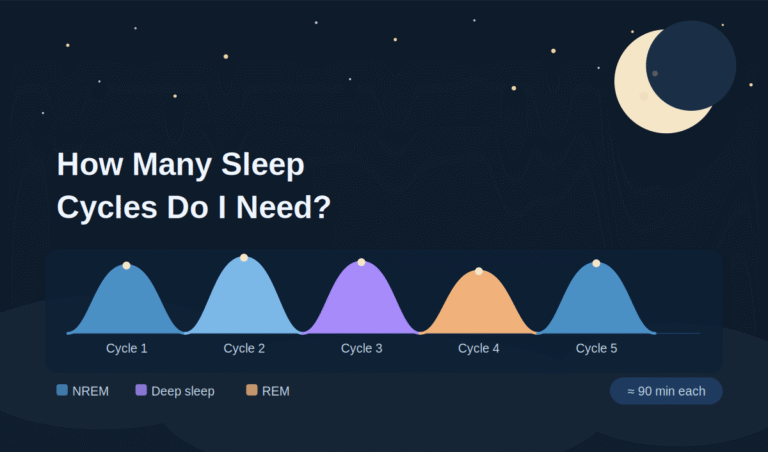
A single sleep cycle lasts about 90 minutes and moves through a set order of stages — light sleep first, then deep sleep, then REM (the dreaming stage) — before starting over. Across a full night, you repeat that cycle four to six times. Early in the night, the cycles hold more deep sleep; later on, they hold more REM. That repeating, shifting pattern is what a normal night of sleep looks like.
Below is what each stage is, how a full night of cycles fits together, how long a cycle runs, and how many sleep cycles you need — plus how to line your bedtime up with the end of a cycle.
What Is a Sleep Cycle?
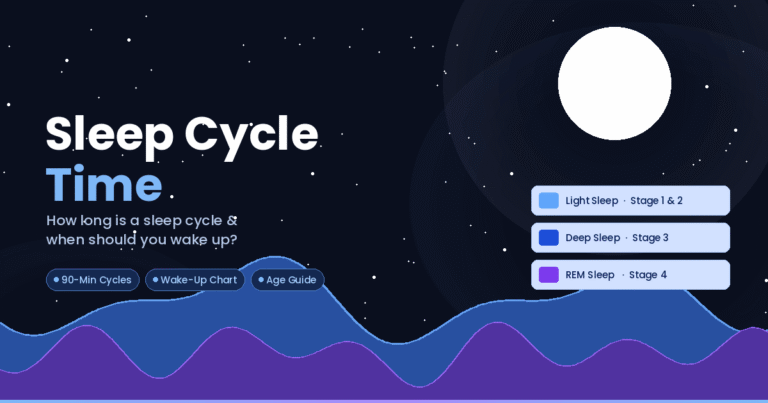
A sleep cycle is one full pass through the stages your brain moves through while you sleep. There are two broad types of sleep in each cycle: NREM (non-REM) sleep, which has three stages, and REM sleep, which comes last. A typical cycle runs in this order — N1, then N2, then N3, back to N2, then REM — and then the next cycle begins.
You don’t move through the stages just once a night. You loop through them again and again, and the mix of stages changes as the night goes on.
The Stages in a Sleep Cycle
Here’s what each stage looks like and roughly how long it lasts in an early cycle:
| Stage | Type | What it is | Rough length (first cycle) |
|---|---|---|---|
| N1 | NREM, light | The drifting-off stage between awake and asleep. Easy to wake from. | 1–7 minutes |
| N2 | NREM, light | Body winds down — heart rate and temperature drop. Makes up the largest share of the night. | 10–25 minutes |
| N3 | NREM, deep | Slow-wave, deep sleep. The hardest stage to be woken from. | 20–40 minutes |
| REM | REM | The dreaming stage. The brain is active while the body stays still. | ~10 minutes (grows later) |
In rough proportions across a whole night, light sleep (N1 and N2) takes up around half your total sleep, deep sleep (N3) around a fifth, and REM around a fifth to a quarter — with the exact split shifting cycle by cycle.
What a Full Night of Sleep Cycles Looks Like
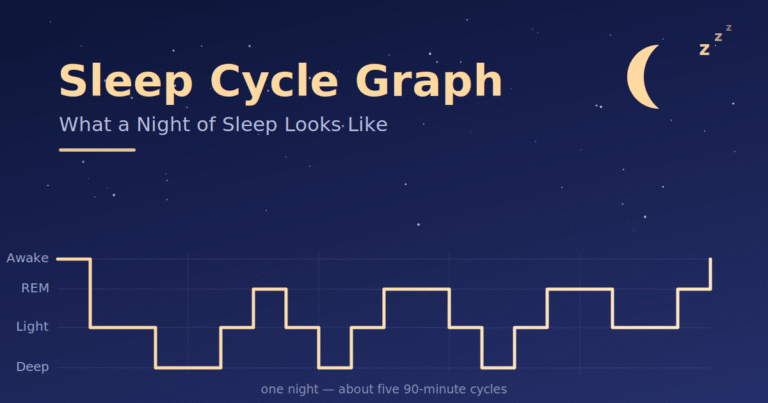
If you charted a night of sleep — what’s often called a sleep cycle chart or hypnogram — you wouldn’t see a flat line. You’d see a wave that dips down into deep sleep and rises back up toward REM and light sleep, over and over, four to six times.
The key detail is how the mix shifts across the night:
- Early cycles are heavy on deep sleep (N3). Most of your deep sleep happens in the first half of the night.
- Later cycles are heavy on REM. REM periods start short (around 10 minutes) and stretch longer with each cycle, so the longest dreaming stretches come in the hours before you wake.
So a normal night isn’t the same cycle repeated identically — it’s front-loaded with deep sleep and back-loaded with REM. The first cycle of the night also tends to be a little shorter than the ones that follow.
How Long Is One Sleep Cycle?
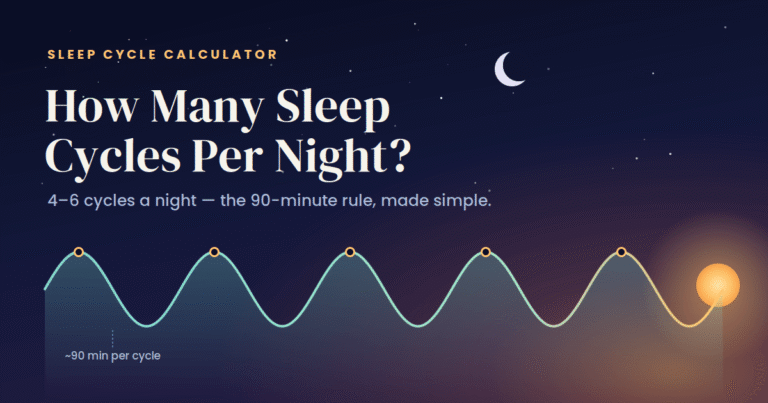
One sleep cycle runs about 90 minutes on average. In practice, it varies from person to person and cycle to cycle, roughly in the 70-to-120-minute range, and the first cycle of the night often runs on the shorter side. The 90-minute figure is the average that most sleep calculators use because it’s a reliable middle point for planning.
How Many Sleep Cycles Do You Need in a Night?
A full night is usually four to six complete cycles. At about 90 minutes each, that works out to roughly six hours (four cycles) up to nine hours (six cycles). Five cycles — about 7.5 hours — are a common target that fits most schedules.
Because the cycles come in 90-minute blocks, the cleanest wake-up times fall at the end of a whole number of cycles rather than partway through one. That’s the whole idea behind counting sleep in cycles instead of just hours.
Why It Helps to Wake at the End of a Cycle
Waking at the end of a cycle — as a light stage finishes — tends to feel easier than being pulled out of deep sleep in the middle of one. That’s what a sleep cycle calculator is built to find: instead of adding a flat eight hours, it counts forward or backwards in 90-minute blocks so the alarm lands on a cycle boundary.
You can try it with the sleep cycle calculator for any bedtime or wake time. For worked examples, see the wake-up options for an 11 PM bedtime or the bedtimes that line up with a 7 AM wake-up, and the 12 AM bedtime page for a midnight start.
Does a Sleep Cycle Change With Age?
Yes — the shape of a cycle isn’t fixed for life. Newborns run much shorter cycles (closer to 50–60 minutes) with a far larger share of REM. Cycles lengthen through childhood and settle near the adult 90-minute average by the teenage years. Later in life, the amount of deep N3 sleep tends to fall, and sleep often becomes more broken across the night. The 90-minute figure this page uses reflects a typical adult cycle.
Frequently Asked Questions
What should a sleep cycle look like? About 90 minutes long, moving from light sleep (N1, N2) into deep sleep (N3) and then REM, before repeating. A full night is four to six of these cycles, with more deep sleep early and more REM later.
How long is one sleep cycle? About 90 minutes on average, though it can range from roughly 70 to 120 minutes, and the first cycle is often shorter.
How many 90-minute sleep cycles do you need? Most adults aim for four to six complete cycles a night — about six to nine hours, with five cycles (7.5 hours) a common target.
How many hours should you be in each sleep stage? Across a full night, light sleep is roughly half of the total, deep sleep about a fifth, and REM about a fifth to a quarter, with the balance shifting from more deep sleep early to more REM later.
What does a sleep cycle chart look like? A wave that repeats four to six times — dipping into deep sleep, then rising toward REM and light sleep — with deep sleep concentrated early in the night and REM stretching longer toward morning.
The Bottom Line
A normal sleep cycle is about 90 minutes long and runs from light sleep into deep sleep and then REM, repeating four to six times a night — front-loaded with deep sleep and back-loaded with REM. Because sleep comes in these 90-minute blocks, the easiest wake-up times land at the end of a cycle rather than in the middle of one.
To see where your own cycles fall for a given bedtime or alarm, run the times through the sleep cycle calculator and aim for a cycle-end wake-up.